KRE-CIMS, Spring Semester 2012
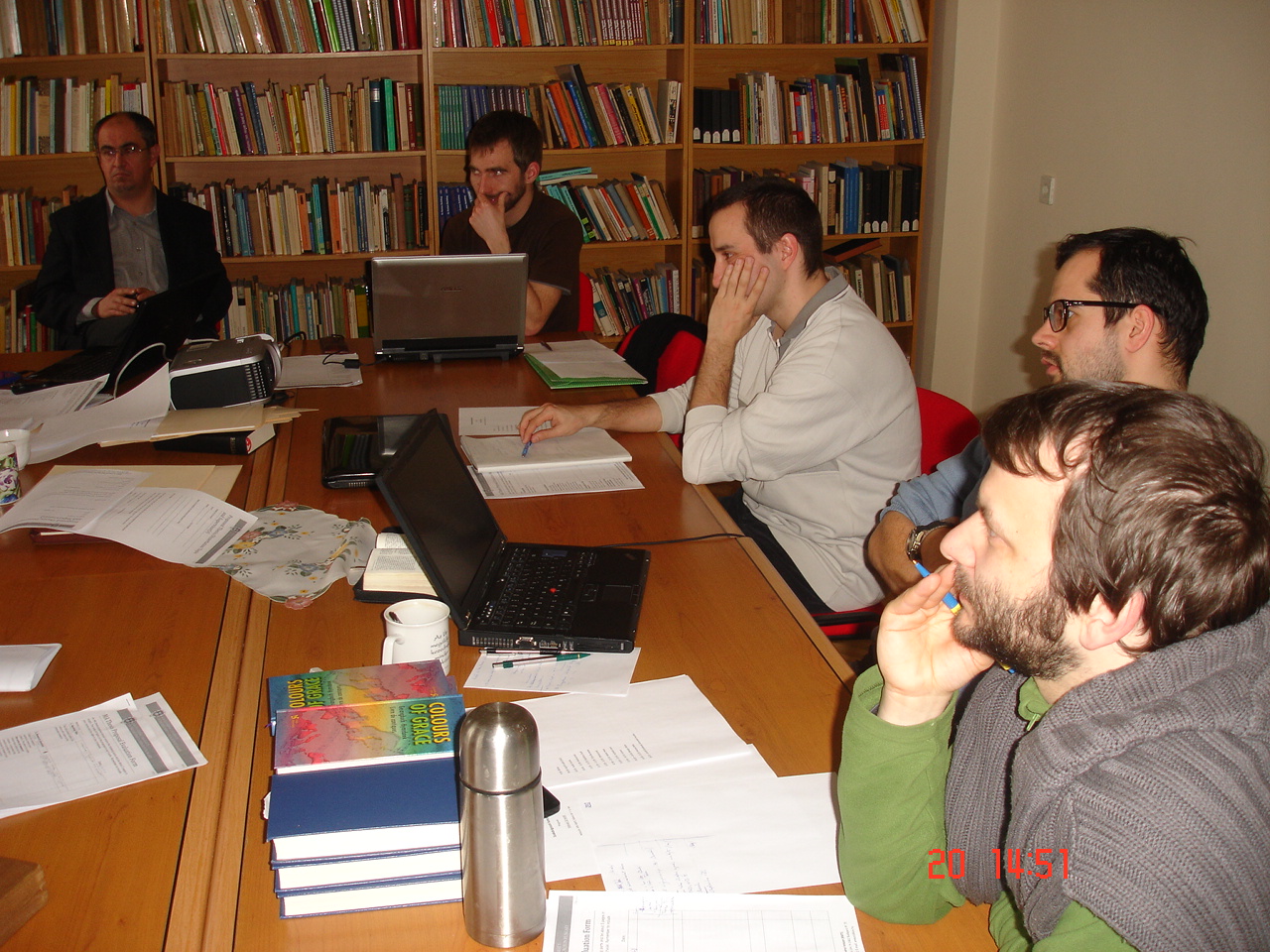
In the spring semester of 2012 Prof. Kool has been the consultant professor for master thesis for 6 students at the Baptist Theological academy (of which 3 have submitted their theses this semester and the other 3 is planning to submit in autumn 2012), 1 student at the Faculty of humanities of KRE and 1 student from the Faculty of Theology (the latter with the submission deadline March 2013).The group met every second Monday at the premises of CIMS. Participants had to present the current status of their MA thesis followed by a discussion in which evry student could as questions about the concept, methodology and the work of the candidate. The events were concluded by a presentation by Prof Kool which were to help the students in certain methodological and writing issues. The consultations were obligatory to those whose official consultant was Prof. Kool, however every time more students took part in the meetings, whose thesis was connected to missiology. Students came along other occasions, sometimes for a whole week to the library for their research, using the facilities of the guestroom at CIMS.
Some feedback from the students:
Péter Balogh, Baptist Theological Academy:
I have found the consultations very useful. I received feedbacks form Dr. Kool and form my felow students that have brought new thaoughts and prospectives to my research. Being able to see my fellow students’ research methods and working methods shaped my own research methodology.
It was very helpful t hat I had to present my research topic to an academic group even at the phase of drafting. Thus i had an academic control form the begining. As a result of the consultations I narrowed my research, made several amendments, and included new topics in my thesis. I have receive sugestions for literature also which I had not found previously.
It was the result of the consultations that I understoodthe real purpose of a thesis research and that it is written in an academic environment. I am in particular thankful to Dr. Kool who carefully examined my thesis in the course of writing and with her comments was a great help to accomplish it.
Péter Márki Baptist Theological Academy:
The consultations were really motivating because „more eyes see more”. Geting an insight to other people’s work wasinspiring to me. The consultations helped me in getting an overview and a good research plan, though I could not finish it this semester. Ihope these consultations will continue.
Zsolt Kapitány Baptist Theological Academy:
I have found the consultations of the research group helpful in many ways: We met regularly, so we had a constant push to work, because we had to present what progress we had made since the last meeting. This helped us also to practice presenting a topic to an acedemic public. Also we experienced a community in which we could encourage each other for perseverance in the work. Also the comments and questions of my fellow students helped me to clarify my own concept. In addition they enlightened me which part should I avoid and which sould I emphasize in my thesis. The methodological issues presented by Dr Kool helped me to carry out a profound and well structured research.
Judit Györfi Lutheran Theological University:
I gained much form the consultations. Looking at my thesis research from the outside my fellow students draw my attention to parts which I would have never thought about sitting in a room on my own. On the other hand meeting regularly students in a similar situation was a great encouragement. After every meeting I gained new impulse and inspiration to carry on with the work. Also the information from dr Kool on methodology helped me to pay attention to the footnotes, the clear linking of the chapters , to the conclusion, etc. I think these consultations were good occasions by which we could benefit a lot.
Imre Szólláth Baptist Theological Academy:
MY fellow students adressed to me many questions during and after my presentation. I really felt as being in a defence where I have to defend my concept ad hipothesis. As a result of this discussion I could see my topic from another prospective as well. It helped me to keep balance between the various opinions and also inspired me to make many interviews.
Ruzsa Nagy Zoltán, 22 June 2012
Showing posts with label CIMS Courses. Show all posts
Showing posts with label CIMS Courses. Show all posts
Friday, June 22, 2012
From Jerusalem to Manus, the Mission of the Church
Missiology Course „From Jerusalem to Manus, the Mission of the Church”
In the spring semester of 2012 Dr. Kool taught a mission course at the Faculty of Theology of the Károli Reformed University. Altogether 7 Theological students took part in the course, one from the 5th, the rest form the 1st and 2nd years. The course was held regularly on Thursday afternoon at the premises of CIMS. The topic was divided into two parts: during the first six weeks of the semester the students examined the major steps in mission history of the universal church as well as the mission of the Hungarian proterstant churches through studying the biographies of selected persons. The students had to work in pairs: each pair had a period of Christian History and in that each individual had to research on the life of a missionary of that era. As part of their research students had to reflect on the given misionary according to some criteria:
• What was his or her motivation for mission?
• What was the focus of his/her mission?
• Where was he or she serving?
• Through which organization did the missionary go to the mission field and how did he/she kept contact with the sending churches?
• What conclusion can we draw from the life of that misionary to our lives and to today’s church?
At the second part of the semester students in the same pairs as before were asked to visit some of the mission organizations who have active missionaries from Hungary serving somewhere in the world. The task was to present the mission organization and for each student to make an interview with a present missionary.
As a result of that course first the students have gained an overview of the Christian misssion since the apostolic age until today. This overview is far more than information, but a reflection on the necessity of mission and on the different forms of mission. Second, by visiting the mission organizations the students not only got a picture of the mission work and service opportunnites of today but also have gained enthisuasm for mission.
Some comments form teh students:
• „As a result of the course now I gained a mision historical vision in addition to the Biblical and missiological understanding.I could se that the mission command of Jesus has been taken seriously by many people in the history of the Church and their work gained fruit.”
• „I have learnt a lot about mission organizations in the course and gained a broad vision on mission.”
• “Through the course we gained new knowledge and got a more open prospective on the topic of mission. Besides it is building our faith, as the topic of the course was the work of God in the world.”
• “We got a good overview on mission history.”
• “We learnt about mission organizations and possibilities for world mission.”
• “The course was not to give us information only, but we were studying a topic that we can include in our daily prayer topics and it was for the edification of our faith.”
• “I learnt a lot more about the missionary field and I hope to take part in a mission’s trip one day.”

Monday, February 20, 2012




Saturday, February 11, 2012

Saturday, October 15, 2011
Een week Boedapest
Een week Boedapest
Wil je gastcollege komen geven over kerk en kerkelijk leven in Nederland?
Hetging om een blok in het masterprogramma van studenten Neerlandistiek aan deKaroli-Universiteit te Boedapest. Het verzoek bereikte me via Prof. dr. A.M. Kool, missioloog aldaar.Het werd een heel avontuur. Wat was de plek van een dergelijk onderwerp in hetcurriculum? Waarom zouden Neerlandici daar iets van moeten weten? Het lagvoor de hand een antwoord te zoeken in de Nederlandse literatuur. Veel daarvanveronderstelt kennis van kerk en kerkelijk leven.Er bleek nog een andere reden mee te spelen. Het ging om onderwijs aan de Károli Gáspár Református Egyetem, de universiteit van de Hongaarse Protestantse Kerk. De colleges moesten ook recht doen aan die identiteit. Dat maakte het lastig: hoe moest je het aanpakken, meer (kerk)historisch of toch theologisch? Ik heb die vraag meteen maar op tafel gelegd en onderweg steeds aangegeven vanuit welke discipline de stof aan de orde werd gesteld.Het is op zich al een interessant gegeven, zo’n Gereformeerde universiteit. Wat iser de status van? Gaat het om een soort VU? Of juist helemaal niet? Dat was een heel aardig aanknopingspunt voor een stuk 19 de eeuwse kerkgeschiedenis over de scheiding van kerk en staat, Hoedemaker en Kuyper, schoolstrijd en verzuiling. Actueel, ook voor de Hongaarse Gereformeerde Kerk en haar plek inde samenleving bleek de tegenstelling tussen beide theologen: Hoedemaker ende volkskerk, zijn kijk op de natie als organisme zoals de Romantiek dat zag, endaar tegenover Kuyper die dacht in termen van een Verlicht liberalisme en pleittevoor een vrije, belijdende kerk waarvan de leden zich maatschappelijkorganiseerden. Er bleek meer affiniteit met de eerste.De universiteit ligt aan het Calvijnplein in het centrum van Pest, met daaraaneen serie kroegen waarvan er een naar de grote reformator is vernoemd. Calvijnen meer in het bijzonder het calvinisme hebben een belangrijke rol gespeeld inde strijd van de Hongaren tegen de Habsburgers. Ook dat leverde een aardigeparallel met onze vaderlandse geschiedenis. In beide gevallen bleek dat er steungezocht werd bij de Turkse sultan Suleiman en zijn moslimlegers (wat deNederlanden betreft door Willem van Oranje via een Joodse relatie). Het kaninderdaad verkeren.Arminius van Hollandse komaf, en Gomarus van Vlaamse huize kwamen voorbijen met de laatste de grote stroom vluchtelingen van calvinistische overtuiging uithet zuiden. Zij versterkten de burgerij in de steden met kennis, geld enondernemingszin. De positie van beide theologen bleek onlosmakelijk verwevenmet de strijd om de macht tussen Maurits en de burgers aan de ene kant, en VanOldenbarnevelt en de regenten aan de andere. De Synode van Dordt,1618/1619, bevestigd meer dan de overwinning van de Gereformeerde religie.Een interessant agendapunt op die synode, ingebracht door koning Jacoubus Ivan Engeland, was of dat kon, een bisschop in een kerk van gereformeerdesignatuur. De Hongaarse Gereformeerde Kerk kent als enige van die signatuur het episcopaat. Waarom zou die koning geïnteresseerd zijn in zo’n hiërarchisch gestructureerde kerk? Wilde hij de kerk als tegenhanger van de staat? Zoals je inde Republiek een presbyteraal georganiseerde kerk had. Zou dat een reden zijnwaarom de Hongaarse Gereformeerde Kerk een bisschop heeft? Wat verderrondkijken in het Europa van na de Reformatie leverde meer parallellen.
Het laatste deel van de colleges werd gewijd aan een derde ingrijpendeverandering in maatschappijstructuur: het ontstaan van de open samenleving nade Tweede Wereldoorlog en het proces van ontzuiling. Naast de analyses en decijfers van de godsdienstsociologen kwam ook de theologische bezinning op depositie van de kerk ter sprake, de kerkorde (Christus-belijdende volkskerk), depublicaties van de synode, de apostolaatstheologie, soms haast wanhopige pogingen om haar bestaan als volkskerk te rechtvaardigen. Aan de hand van VanRuler en Kraemer probeerden we de theologische discussie in grote lijnen tevolgen. De fusies in kerk en politiek, CDA en PKN, demonsteerden eerderverlegenheid dan visie. Uit de weerklank die Wilders beroep op de nationale(joods-christelijke) identiteit vondt, bleek dat de open samenleving voor veelmensen een angstig avontuur is. De studenten voelden precies aan om welkeproblematiek het ging.Ter afronding van het blok moesten zij een paper over schrijven over een aspect ervan. Eén van hen had al een scriptie gemaakt over Karel en de Elegast. Zij wilde over diezelfde Karel nu schrijven als keizer van het Heilige Roomse Rijk, zodoor paus Leo III gekroond in 800. Die wilde daarmee de claim vanConstantinopel als erfgenaam van Rome en het Romeinse Rijk betwisten: Europaals Corpus Christianum met zijn Codex die inquisitie en kruistochtenrechtvaardigde. Is de islamitische ummah met zijn sharia geen parallel? was devraag.Europa is opnieuw één aan het worden. Zijn Hongarije en Holland eigenlijk geenprovincies van de EU? Wat draagt die eenheid nu? Hoe zien de kerken hun roldaarin? Kerken, meervoud, want blijven denken in termen van een nationale,gevestigde kerk is jezelf buiten spel zetten, je missie niet verstaan.Een andere student koos voor de contacten tussen Oost en West, voor en na deval van de Muur. Hebe Kohlbrugge inspireert haar. Wat waren de motieven omde gemeenten onder communistisch regiem te bezoeken? Kwam je namens dekerk of speelde er ook een politiek protest mee? Of zijn beide verweven? Hoedan ook, hoe verdiepen wij die (vooral diakonale) contacten tot een geestelijkebeweging in Europa? Moeten we in onze open samenleving niet leren kerk enstaat strikt te scheiden en het zoeken in de richting van een civil religion? Het helderst en het hardst kwam de ontzuiling en de daarmee gepaard gaande identiteitsproblematiek aan het licht toen het ging over jeugd en jeugdcultuur. Alis het een heel ander verhaal, de val van de Muur schiep eenzelfde vacuüm en zo ook herkenning en verbondenheid die je deed beseffen deel te zijn van eenzelfdecultureel klimaat. Het bleek een populair onderwerp om je verder in te
verdiepen: stoeien met een grote variëteit aan stijlen (muziek, kleding enz.) op zoek naar jezelf. Het kerkelijk instituut bleek jongeren niets te zeggen. Zij zijn deel van hun eigen netwerk.Mijn vrouw en ik werden door prof. Kool uitgenodigd voor een ontmoeting metmensen uitgezonden door de Christian Reformed Church in Amerika in allerleilanden van Oost-Europa. Zij waren in Boedapest bijeen geroepen voor evaluatie,bezinning en toerusting. Die avond ging het om de evaluatie. Een deskundigecoach leidde het gesprek. Daarbij kwam ook de relatie tot de respectievelijke gevestigde kerken ter sprake. Het viel op hoezeer die aspect zijn van de nationale identiteit. Dat geldt met name voor de Orthodoxe Kerken. Maar juist indie hoogliturgische kerken wordt het besef wakker dat de deur open moet, dat het contact met andere kerken gezocht moet worden, dat je je positie alsgevestigde kerk daarom moet willen relativeren en dat je samen teruggeworpen wordt op de vraag wat je missie als kerk(en) van Christus in een opensamenleving is. Het werd een verrijkend verblijf. Met veel respect denken wij aan de faculteitdaar en aan het werk van Prof. Kool die in haar wetenschappelijk werk en op hetgrondvlak met huid en haar betrokken is bij kerk en kerkelijk leven in eencontext van ingrijpende politieke en maatschappelijke verandering. AJ.
Friday, October 7, 2011
Evaluations course Dutch Churches and Church life -- Drs. A. Juffer
1. Church History did not belong to my favorite subjects but I had a nice surprise this week. Despite the fact that Dutch was only my minor before I have started the major, I could understand most of the curriculum as the professor did his best to explain everything in the simplest and clearest way. The curriculum at the beginning of the week was harder because there were more historical data but the topics we dealt with on Wednesday and Friday were interesting and thought provoking (the situation of the Jews in Holland, the results of researches on the immigrants and people’s attitude towards Church, faith, religion and God in Holland today). It pleased me that the professor was interested in our personal point of view, and he did his best to communicate the subject in an interesting and clear way instead of concentrating only on pure facts. It was good to hear about his personal experience and to learn of the Church from this perspective. The summaries at the end of the lectures were very useful and therefore when I reread it at home I could easily take in the information and remember them.
What
I regretted was that the course was very intensive and there was a lot of
information during the week. It would be nice to have every lecture held by a
Dutch professor so that we could improve our language skill much more and we
would have to practice speaking the Dutch language.
2. Flóra Remzső
The
course gave me a lot of new information; on the whole I can only put down
positive remarks. The curriculum was detailed but perspicuous. Important events
were highlighted giving a guideline we can build on.
Breaks
and timing of lectures were smooth and well-organized.
All
in all, I have learnt a lot of new things since I used to study Dutch as a
minor and I did not have much knowledge yet. This course will also back up my
knowledge about Dutch history.
3. Anna Szijártó
The
lecture was very interesting. A detailed picture of the connection of Church and politics in Holland was shown to
us, which I will definitely be able to utilize in my further studies. We thank
you for the high standard and useful lectures.
4. Piroska Wostály
De lessen waren over het geneel genoenicu
erg interessant. Ik heb tot nu toe nog nooit over religie gestudeerd en zo heb
ik ook iets nieuws over Wederland genoord. Wat ik nog interessant en goed vond
is dat de clocent ook onze meking wilde horen tijdens de les.
Misckien wat ein beetje negatief was dat
er te veel details waren binneu een week die men niet kan ontnouden, maar
positief is dat ze weren nict guraagd tijclens de examen.
5. Ágnes Kelemen
Hearing
only the title of this lecture made me a bit worried but during this week, I
believe, I have gained useful knowledge.
Although
there were some less interesting moments (lots of names were presented), we touched
many interesting topics, especially Alber Juffer’s personal experience and
stories. This way we could slow down and think about such things that can be
abstracted from the profane world. I liked that he could look at different
conceptions within the Church from a critical point of view.
It
was not always obvious what the requirements would be at the end and how deep
we would need to go into details at the exam. The content and the muchness made
me a bit worried and I was not sure what extent of lexical knowledge he would
expect from us the last day.
Now
at the end of our discussion I think that the exam was fair enough.
6. During the lectures we have gained a
lot of interesting information on the spiritual life in Holland. Mr. Juffer
held his lectures in a very clear and patient manner therefore it was easy to
pay attention. Unfortunately, because of the short of time the whole subject
had to be elaborated in one week. Sometimes it was not easy to take in so much
information a day. On the whole, I have a positive opinion about the course
especially because of Mr. Juffer’s manner of lecturing.
Wednesday, April 27, 2011
‘Amsterdam’ Een weekend met Hongaarse studenten
27 april 2011
door Szaszi Bene
Eerder dit jaar hebben we een vraag gekregen van Andras Lovas uit Budapest of we bereid waren om aan een antal theologie studenten de missionaire ontwikkelingen van de stad te laten zien. Met het doel dat de studenten proeven van de werk van AiB en andere ministries in Amsterdam. Samen met Bas van de Graaf (Jeruzalemkerk), Jeanette de Waard (Hoop voor Noord) en Siebrand Wierda (Via Nova) hebben we de Hongaren ontvangen en op verschillende momenten van de weekend met de studenten gesproken over kerk zijn in een seculiere stad.
Idols of the city
We hebben de studenten twee keer meegenomen voor een wandeling in de stad met de vraag: Wat zegt Amsterdam over zichzelf? Voor de studenten was dit de eerste keer in Amsterdam. Ze hebben dan ook een redelijke cultuur schok gehad. De rondleiding was bedoeld om de stad te leren kennen en om de goden van de stad te kunnen identificeren. Als je een missionaire kerk wilt zijn in een grote stad dan moet je stad goed kennen. De studenten hebben met open ogen in Amsterdam rondgelopen. Enerzijds hebben ze genoten wat ze zagen en anderzijds waren ze verontwaardigd. Amsterdam kan overweldigend zijn tijdens een eerste bezoek. Maar ze hebben er goed werk van gemaakt om de goden van de stad te inventariseren en ook te benoemen. Bijna iedereen vond dat Vrijheid het woord is dat de stad over zichzelf roept. ‘Kom naar Amsterdam want hier ben je vrij om te zijn wie je maar wilt zijn’ zou zomaar de motto kunnen zijn van de stad. Voor een eerste indruk en bezoek in Amsterdam hebben de studenten de spijker op de kop geslagen. De uitdaging was dan ook om met de zelfde ogen te kijken naar de stad Budapest. Dit kwam als een verassing voor hun. Ze waren niet gewent om zulke kritische vragen te stellen tegenover hun eigen context. Dit was een echte eye-opener.
Mission mindedness
De studenten hebben ook een inspirerende college gekregen van Siebrand. Hij heeft vertelt over wat een missionaire kerk is en hoe men een kerk opnieuw kan laten starten, kerk planten en samen werken met anderen in een partnerschap. Ze waren helemaal onder de indruk van de mission midedeness van de AiB en de andere ministeries in de stad. Het was iets wat ze misten in Budapest. Namelijk kerken die bewust bezig zijn met kerk zijn in de stad en voor de stad. Hun bezoek aan de diensten van Jeruzalemkerk en Hoop voor Noord heeft dit inzicht versterkt. Ze waren ook onder de indruk van de collegialiteit van de verschillede voorgangers. Ze hebben gemerkt dat ze samen werken in plaats van dat ze elkaars concurrent zijn. In het laatste groepsgesprek waren ze allemaal te spreken vooral over manier waarop kerk zijn is gedaan in Amsterdam. Het zal me niet verbazen als we over een paar jaar goede verhalen horen over de kerken in Budapest en dat dit weekend een belangrijke rol heeft daarin gespeeld.
Kort stukje van ds Bas vd Graaf van de Jeruzalemkerk
In het weekend van 15-18 april bezocht een groep van 17 theologiestudenten uit Budapest onze stad. In het kader van het vak missiologie – gegeven door Anne-Marie Kool, hoogleraar op de Karoli Gaspar Universiteit, maakten zij kennis met allerlei gemeenten en projecten in de stad, maar ook met de visie van Amsterdam in Beweging. Het idee was ontstaan tijdens de City-to-City-Europe conferentie in Budapest van 2010. Het is voor deze jonge mensen een prachtig weekend geworden, waarin, zoals we terughoorden, werkelijk allerlei vensters zijn opengegaan. Het was geweldig om iets van wat we in Amsterdam hebben ontvangen de afgelopen jaren te kunnen delen met toekomstige kerkleiders uit Hongarije. Dit smaakte naar meer en we bezinnen ons dan ook op een vervolg.
Met dank aan medeorganisatoren Jeanette de Waard en Szaszi Bene,
Bas van der Graaf


Bron: http://amsterdam-inbeweging.nl/%E2%80%98amsterdam%E2%80%99-een-weekend-met-hongaarse-studenten/
Voor een foto impressie:
Friday, April 22, 2011
Saturday, December 11, 2010
Thursday, June 10, 2010
Exposure course CIMS Urban and Rural Mission in Africa - Dr. András Lovas
In het kader van een college onder verantwoordelijkheid van het CIMS bracht een groep studenten van de verschillende theologische faculteiten in Hongarije een bezoek aan Kenya.
De syllabus van het college (ENG):
http://www.scribd.com/full/32820971?access_key=key-1g440g1tl1dezx6z2hnl
Er staan interessante verslagen op het internet, met foto's en muziek:
http://www.parokia.hu/hir/mutat/1206/
http://www.parokia.hu/hir/mutat/1196/
http://www.parokia.hu/hir/mutat/1194/
http://www.parokia.hu/hir/mutat/1187/
http://www.parokia.hu/hir/mutat/1178/
http://www.parokia.hu/hir/mutat/1168/
Een verslag werd in het Reformatusok Lapja van 28 maart 2010 gepubliceerd:
Ref Lap 28 Maart 2010 Studiereis Kenya
Foto's van de evaluatie bijeenkomst in de Gazdagrét Gemeente:
 |
| Evaluation Kenya 2010 |
Hallgasd Kenya ritmusát! - Pete Violetta
Hallgasd Kenya ritmusát!
Azt hiszem, akkor is nagy élményt jelentett volna az út, ha bekötött szemmel kell végigjárnom, csak a fülemre hallgatva.
Mammají - tavaly csak így emlegettük kedvenc nótánkat, amit a maszájoknál hallottunk. Lenyűgözött mindannyiunkat a dallam és az a különös rugózós tánc, amitől az összes nyakukba aggatott gyöngyös lánc is táncra kel külön-külön.
Idén is találkoztunk a dallammal, meg sok másikkal is. Még így, nem először hallva is lenyűgöző volt. Egy-egy mantraként ismétlődő dallam az út óta vissza-visszatér a fejembe.
Olvasd többet: http://www.parokia.hu/hir/mutat/1206/
A tanegységleirás itt megtekinthető:
Kenya Exposure Course Syll2010
Az kurzus értékeléshez kapcsolódó fényképek itt megnézhető:
 |
| From Evaluation Kenya 2010 |
Monday, March 15, 2010
Empires, Nations, Churches: History and National Identity - Intensive Program Erasmus
Today I lectured in the Empires, Nations, Churches: History and National Identity conference, an Intensive Program sponsered by the Erasmus program, organized by the History department of the Károli University. About 20 students attended, from Portugal, Spain, the Netherlands and Hungary. There was a very lifely discussion following my presentation. I enjoyed interacting with them!
Download the lecture:
http://docs.google.com/Doc?docid=0AVampV5iX-QtZGRqd3Iyem1fMTh2NzZ6Y21udA&hl=en
Download the powerpoint presentation:
http://docs.google.com/present/edit?id=0AVampV5iX-QtZGRqd3Iyem1fMTlnMzVkbWpkNg&hl=en
Download the lecture:
http://docs.google.com/Doc?docid=0AVampV5iX-QtZGRqd3Iyem1fMTh2NzZ6Y21udA&hl=en
Download the powerpoint presentation:
http://docs.google.com/present/edit?id=0AVampV5iX-QtZGRqd3Iyem1fMTlnMzVkbWpkNg&hl=en
Friday, March 12, 2010
Invitation -- Missiological Research Fellowship Workshop
MISSIOLOGICAL RESEARCH FELLOWSHIP WORKSHOP
Date: April 20th – 21th, 2010 (from Tuesday, Wednesday).
Location: Budapest, CIMS / KMTI (Budapest, XI. ker. Kálvin tér 7, conference center on the 3rd floor)
Coordinator: Dr. Dorottya Nagy
Facilitators: Dr. Dorottya Nagy and Dr. Anne-Marie Kool
This two-day peer-tutoring, postgraduate workshop in mission studies offers an avenue for PhD students, DMin students and ministers engaged in research investigating topics in theology or/and mission to present their work and receive feedback from an interdisciplinary audience. We encourage those people who are considering starting a PhD program or another research program to join the workshop. Also PhD supervisors are welcome to join the workshop together with their students.
A more detailed description can be downloaded from: http://docs.google.com/Doc?docid=0AVampV5iX-QtZGRqd3Iyem1fMTVkc3BybXJjbg&hl=en
Deadline of application: March 27th, 2010.
The registration form can be downloaded from: http://docs.google.com/Doc?docid=0AVampV5iX-QtZGRqd3Iyem1fMTZncnJieG1kcA&hl=en
Please forward this email to all those who might be interested!
Further information and application:
Dr. Dorottya Nagy
(dorotti@hotmail.com)
or KMTI / CIMS cims@kre.hu.
Monday, March 8, 2010
Continuing Education for Pastors
Invitation
The Central and Eastern European Institute for Mission Studies („CIMS” / „KMTI”) of the Károli Gáspár Reformed University invites you herewith to a workshop and retreat to be held in April 2010, organized in co-operation with the local Church District of the Reformed Church in Hungary, as part of the Long Life Learning program for pastors.
SPIRITUAL DEPTH IN LIFE AND LEADERSHIP
Date: April 12th – 16th (from Monday till Friday).
Location: Budapest, CIMS / KMTI (Budapest, XI. ker. Kálvin tér 7, conference center on the 3rd floor)
Lecturer: Timothy C. Geoffrion, Ph.D (USA)
This 5 day workshop / retreat will be based on one of Tim’s recent publications „The Spirit-led leader: Nine Leadership Practices and Soul Principles” (Alban 2005).
A more detailed description can be downloaded from: http://docs.google.com/fileview?id=0B1ampV5iX-QtYTlmYzE2OTQtNTVlYi00MTc2LTkxOTktZTU5MzFlN2NlNmM1&hl=en
Deadline of application: March 29th, 2010.
The registration form can be downloaded from: http://docs.google.com/Doc?docid=0AVampV5iX-QtZGRqd3Iyem1fNGdmNjZtZnQy&hl=en
Please see the enclosed material, including the application form for further details. Feel free to forward this email to all those who might be interested!
Further information and application:
at KMTI / CIMS
cims@kre.hu (Mrs. Mónika Józsa).
Monday, November 9, 2009
Impressions from Site Visit to Mongolian Baptist Church in Budapest with some students
As part of the course: Non-Western Christian Communities in Budapest we paid a visit to the Mongolian Baptist Church in Budapest with some students and some friends. I just had received some tracts in Mongolian from German friends. You can tell that Pastor Tsetse and his wife were visibly surprised and very thankful! Mogi Tsetse, daughter of the pastor and student of last years class, translated for us. You find an interview with her under the heading Student Interviews.
Friday, October 16, 2009
Impressions from Theology of Work course
About fifteen students took part in the Theology of Work course with Prof. R. Paul Stevens from Bakke Graduate University organized in cooperation with the Reformed Church District along the Danube.
Rev. András Harmathy (Ref. pastor in Szigetszentmiklós, D. Min. student at BGU) assisted by Mrs. Mónika Józsa (CIMS) did a marvellous job in putting all the logistics of the course together, including visits to workplaces.
This course was the first of its kind to be officially recognized by Bishop Dr. István Szabó as part of the Continuous Education Program for pastors of this Church District.
One of the students, Mrs. Gea Gort from the Netherlands, captured the course in pictures. Take a look at her webalbum: http://www.flickr.com/photos/geagort/sets/72157622591016124/.
To get an impression of what you have missed by NOT attending the course, see the course outline:
TW-Outline BGU Oct09ver3
Tuesday, September 22, 2009
Course announcement: Theology of Work - "Making sense of the other 6 days"
Course of Paul Stevens in Budapest, October 12-16, 2009
About the course:Most people spend most of their waking hours working, yet seldom reflect on its significance. Further, the church frequently gives priority to the in-church activities and the professional ministries without affirming that the whole people of God are in “full time” ministry Monday to Friday, and often Saturday as well. It is therefore worthwhile to explore the definition of “work” from a theological point of view. This course offers this opportunity for the participants, with a focus on the Bible in the context of the everyday life. The course will involve learning as a community and putting into practice the theology of work one has gained.
For more details and application:
TOW Invitation Letter English
Tuesday, September 8, 2009
KRE-KMTI Kurzus 2009/2010 Veritas Forum: Miért Hiszek?
KRE-CIMS Course 2009/2010 Veritas Forum: Why do I believe?
101-23 2009 10Veritas Forum Tanegysegleiras Final
101-23 2009 10Veritas Forum Tanegysegleiras Final
KRE-KMTI Kurzus 2009/2010 Nem-nyugati keresztyén közösségek Magyarországon
KRE-CIMS Course: Non-Western Christian Communities in Hungary
101-23_2009_10Nem nyugati keresztyén közösségek M-on - Klimaváltozás_final
101-23_2009_10Nem nyugati keresztyén közösségek M-on - Klimaváltozás_final
Subscribe to:
Posts (Atom)